The Frame Maker’s Library
A dedicated place to share information and celebrate the history, culture and artistry of the picture frame.
This is the beginning of a small passion project to allow the sharing of information from frame makers, historians, researchers, artists and those working in the field of rare heritage skills and cultural materials conservation.
Our goal is to provide engaging and relevant information for anyone interested in learning more about the story of frames. We appreciate the unique artistry and trade of frame making and recognise frames as important and often overlooked elements in our diverse experience of life, art and culture.
Explore information and resources
Articles
-
Read more about the ancient and contemporary histories of gilding- the technique of applying beaten gold or metal alloy leaf to objects, interiors and artworks.
-
Read about the history and sociology of frame making in Australian history
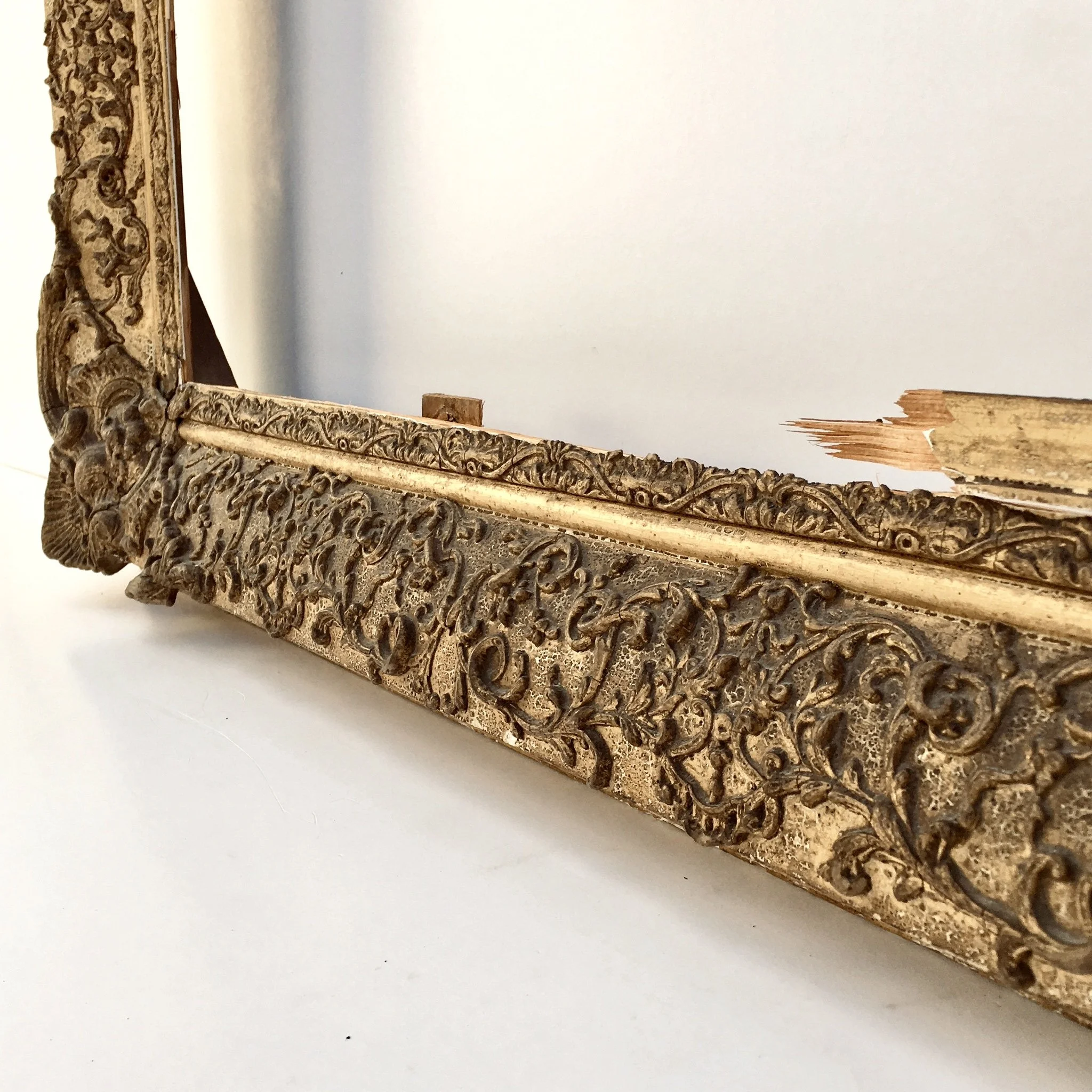
Caring for Antique Picture Frames
Resources
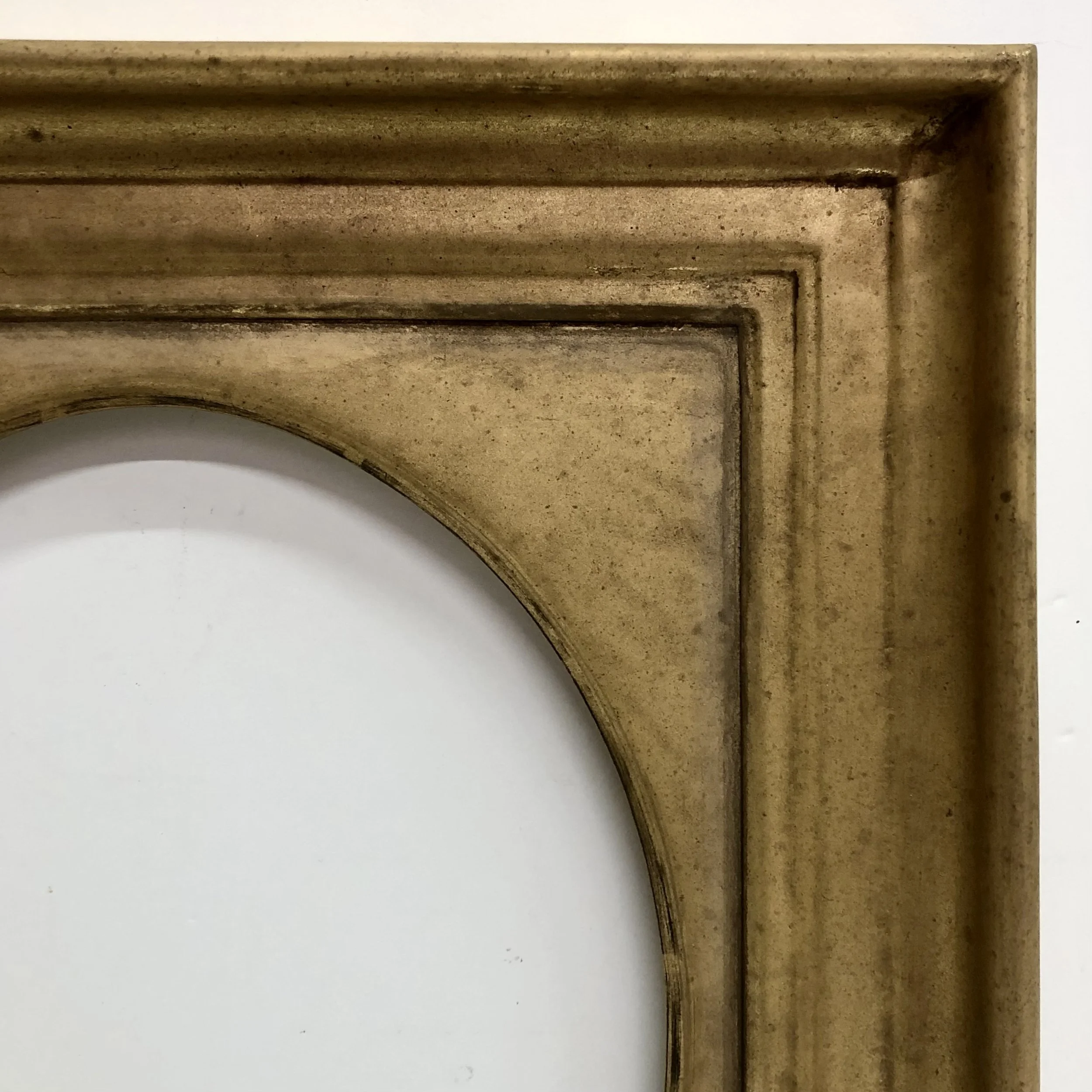
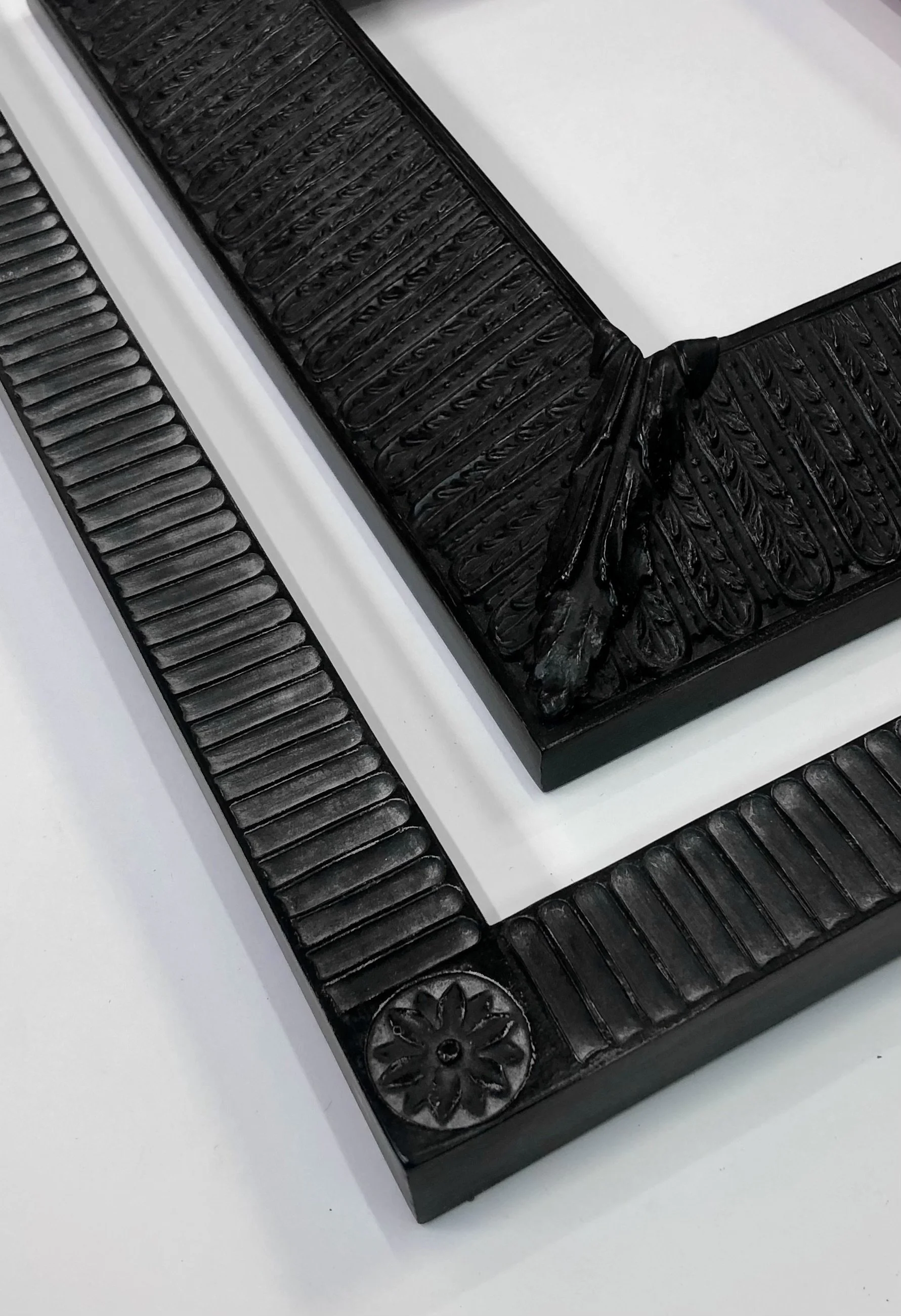
The Purpose of the Picture Frame
The picture frame is more than a functional object.
Picture frames are commonly spoken about as serving the function of protecting the artwork and enhancing the visual and aesthetic appearance of artistic expression.
It can also be said that frames are more than just for protection and decoration. Additionally, they can be understood as important communicators. They can:
Signify the cultural story and social importance of the art
Convey artistic, political and sociological meaning
Guide the physical relationship between a viewer and the art
Homes, businesses, places of worship, education and fine art institutions have been decorated with art and objects for thousands of years and in thousands of manifestations.
Artists, designers, curators and architects have worked with frame makers to achieve impressive aesthetic visions and movements in decoration trends and norms that echo themes throughout contemporary art and design today. Knowledge of frame history and methodology is invaluable for those interested in fine art and specific knowledge about frame making, historical “frame makers” and artist/framer relationships can inform decisions about investing in art, re-framing considerations and provenance discussions.
To learn more about frames, visit our resources page.
The Making of Traditional and Period Style Picture Frames
Although frame makers and picture framers have historically been secretive and cautionary in sharing their methods and techniques of their businesses, it is relevant for the private collector or artist to have a foundational knowledge of how some types of frames are made. Most people are familiar with general picture framing, where a frame is made by cutting and joining a pre-finished moulding for an artwork, print or photograph. Historically, many picture framing businesses also produced their own frames by way of in-house or sub-contracted frame makers, carvers and gilders. These artisans are skilled in a varying cultural and location-specific range of skills and who produce bespoke traditional frames using extensive, highly-skilled and time consuming processes.
Where there is little public understanding of the process, the cost of producing a frame can be initially intriguing to many clients. Here we illustrate a pathway of a traditionally-made frame may be produced in our workshop. This process demonstrates some of the complexities and considerations that go into making a truly unique frame. Various factors impact the cost of making a frame, such as the cost of gold products such as gilding leaf, the costs of a generously sized workshop with specialised machinery, tools and equipment, the cost of high-quality and ethical timbers. The other most notable factor is the time taken to learn rare, heritage skills to a high level for frame making and the time needed to carry out those practices to produce the frame.
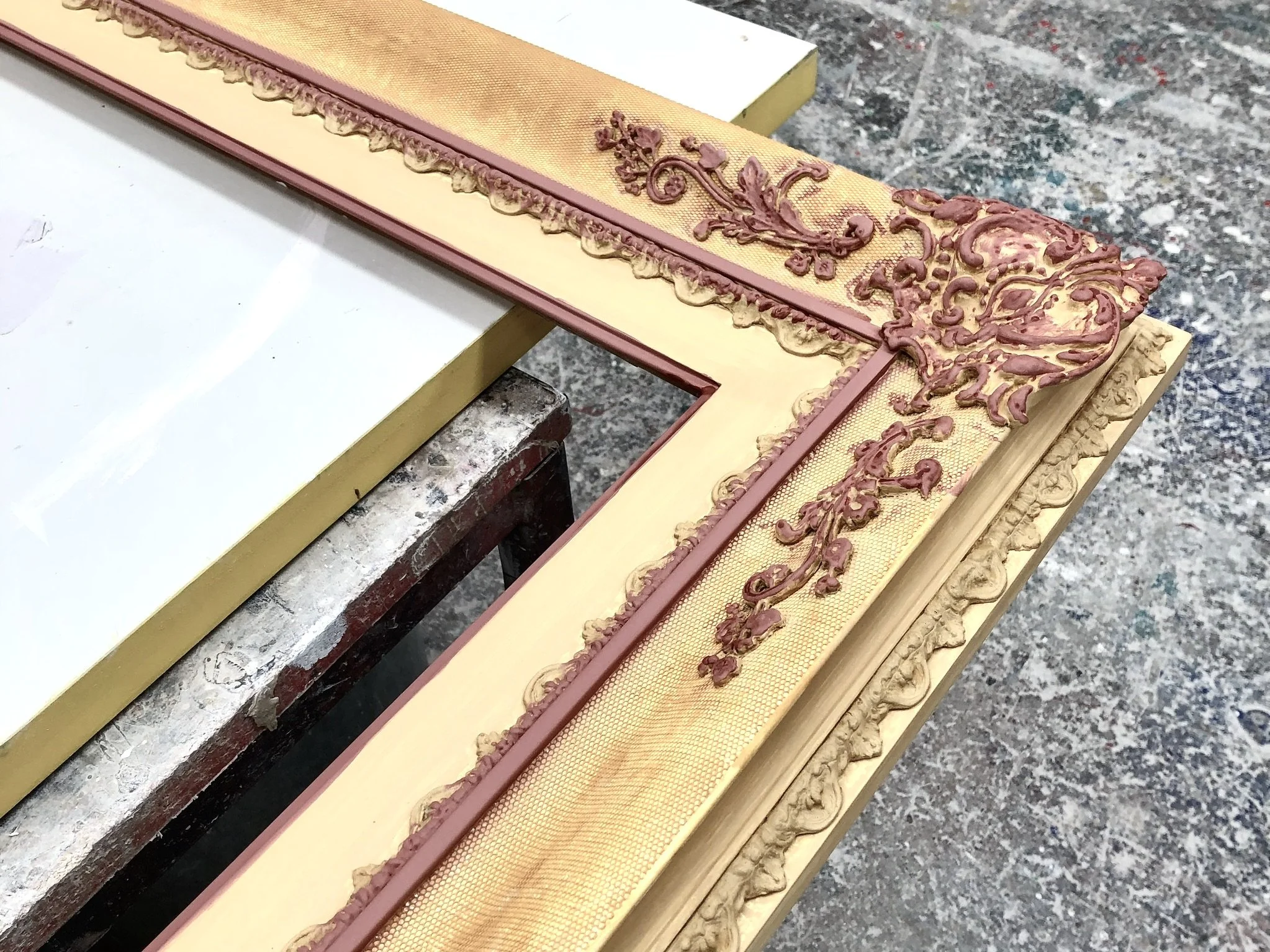
If a frame is to be finished in a traditional gilding technique, much work and attention will be put into the base layers that go underneath the gilded leaf. Bronze powder finished or painted frames often require preparatory layers as well and this can be a time consuming and detail-oriented process.
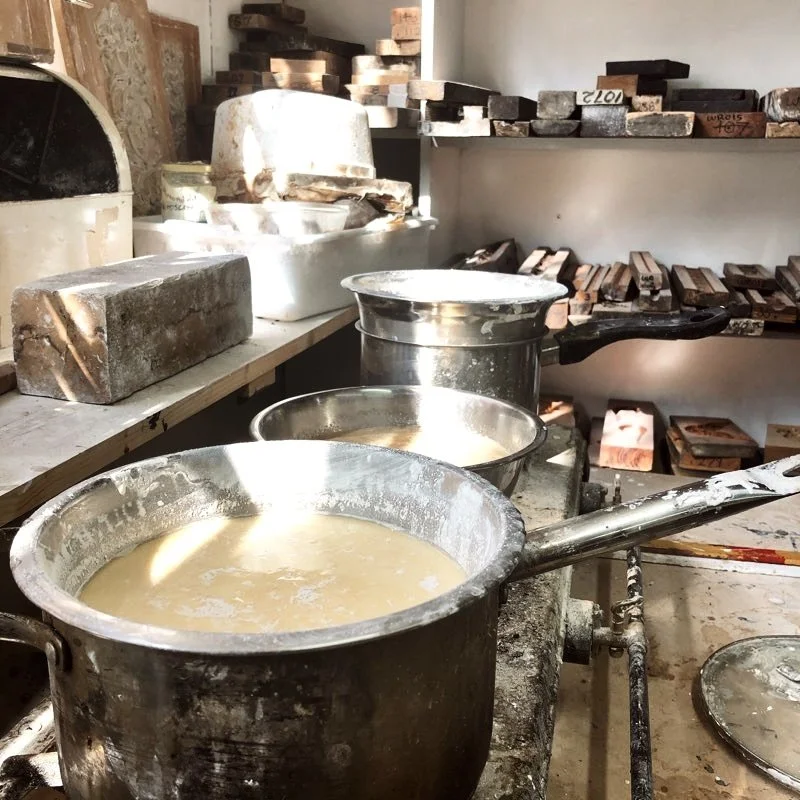
If a frame is to be water-gilded, the base timber will be traditionally gessoed with up to 12 coats of thick, house-made chalk and glue-based liquid. This surface is sanded by two different methods and polished. Traditional clay bole is layered up to 14 times, sometimes using patterns of colours based on the desired gilded effect. The bole layer is sanded and polished if appropriate before being treated to reduce any oil contamination prior to water-gilding.
Step 6. Gilding or finishing
Once the surface of the frame has been prepared, the frame is gilded, bronzed, painted or otherwise finished. If the frame is to be water-gilded, the leaf will be laid with a gilders tip and gilder’s liquor. If the frame is oil-gilded, the surface will be further sealed and sanded before sizing and gilding. The finish is sealed for protection if appropriate and the finish is adjusted with washes, toners or faux patina if required.
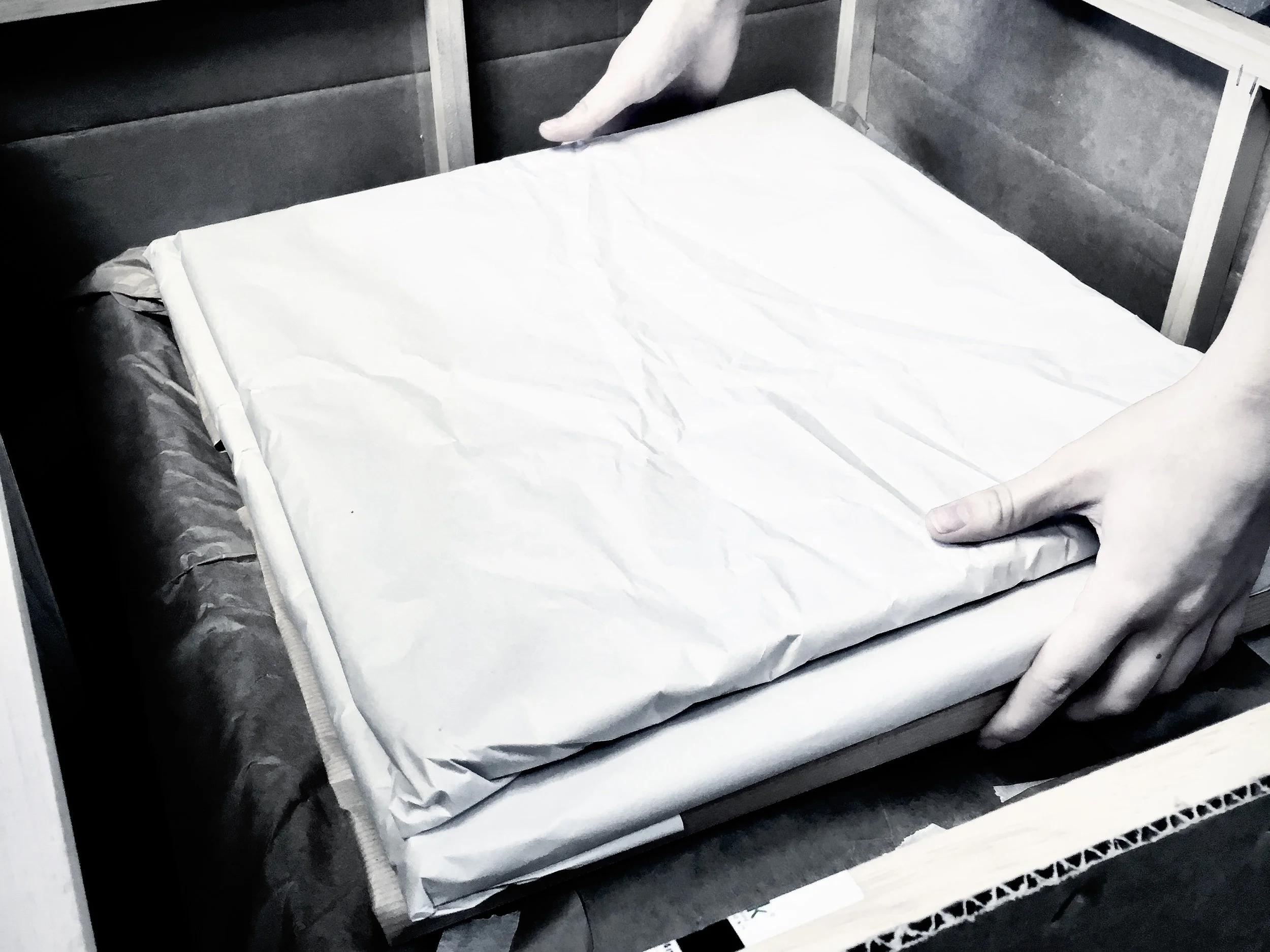
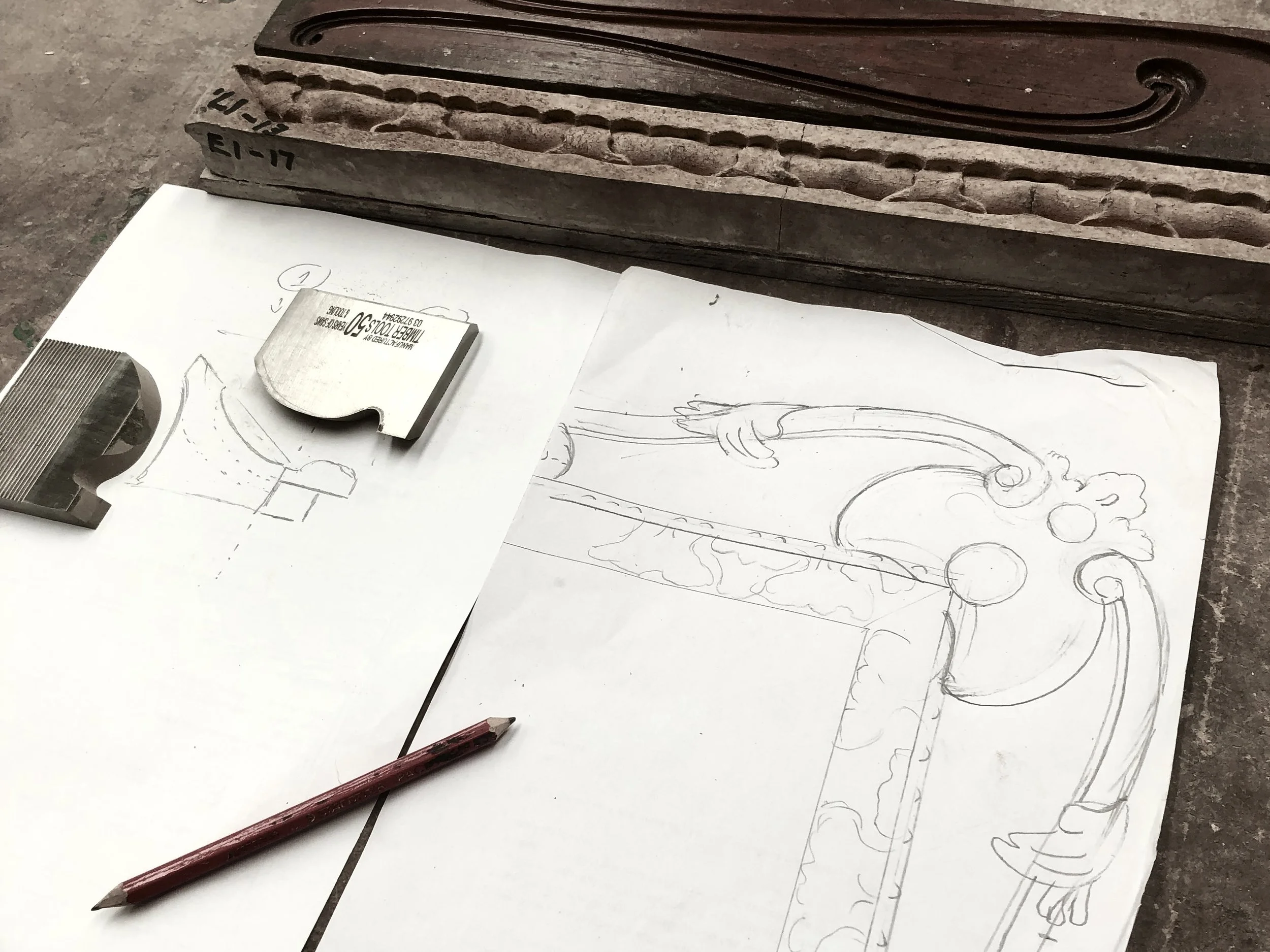
Step 1. Design and intention
Choosing a frame design begins by considering the needs of the artwork, the artists vision and integrity and the needs and preferences of the client or benefactor. Sometimes research into historical framing choices is advised or sometime the client may already have a fluid or rigid idea of what they would like.
Step 2. Preparation of timber moulding
Once a period-style design is chosen, the timber moulding is selected. Traditionally, frame makers could either purchase frame moulding or produce the moulding with a spindle moulder or other woodworking machinery in-house. Some period frames require specific timbers and all moulding must be inspected for quality, damage, warping or risk factors.
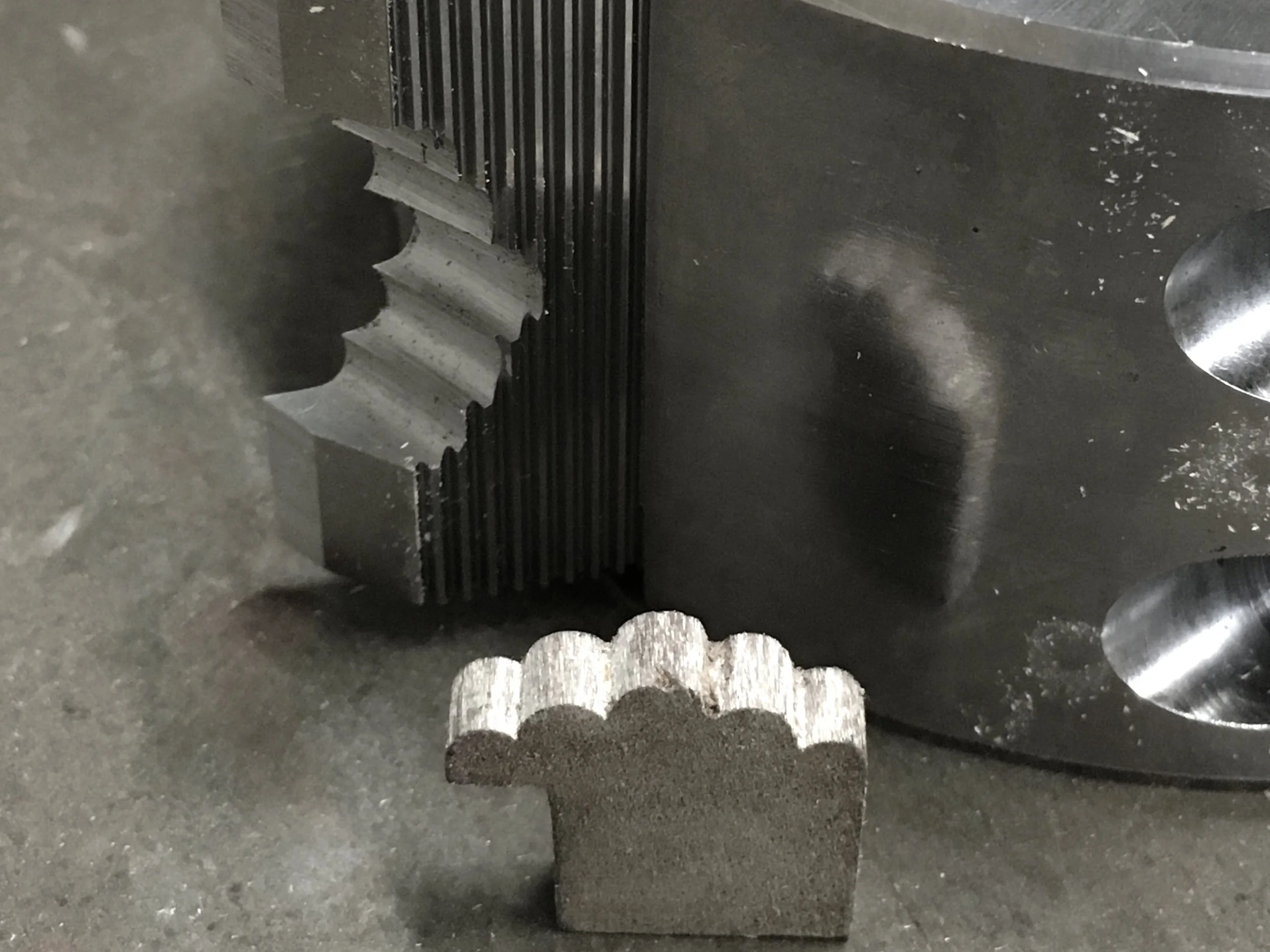
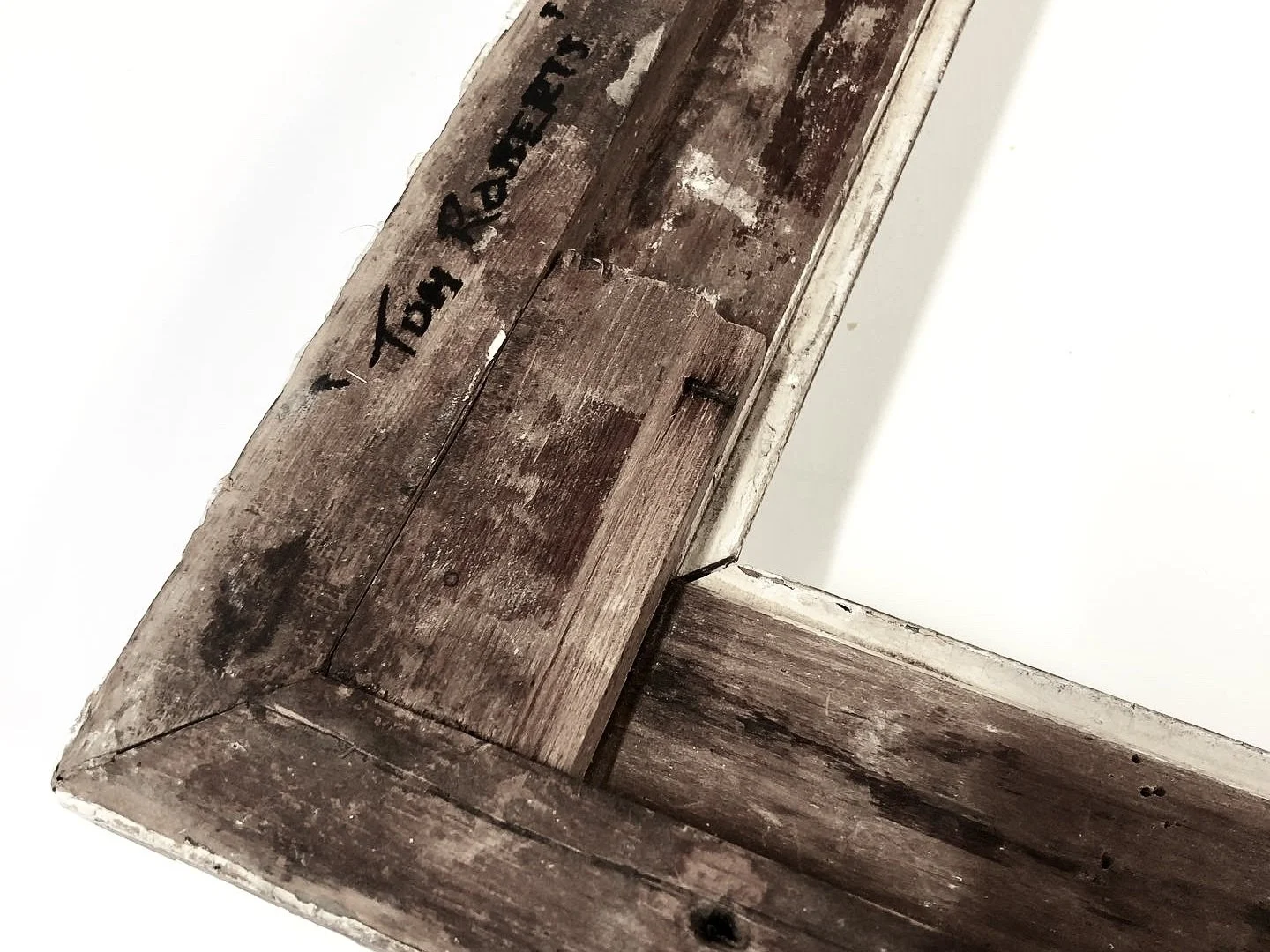
Step 3. The foundational structure and joinery
The moulding (and slip if required) is cut and joined to fit the artwork. For some historical frame reproductions, specialised joinery may be appropriate, such as dovetail or spline joinery.
Step 4. Ornamentation and details
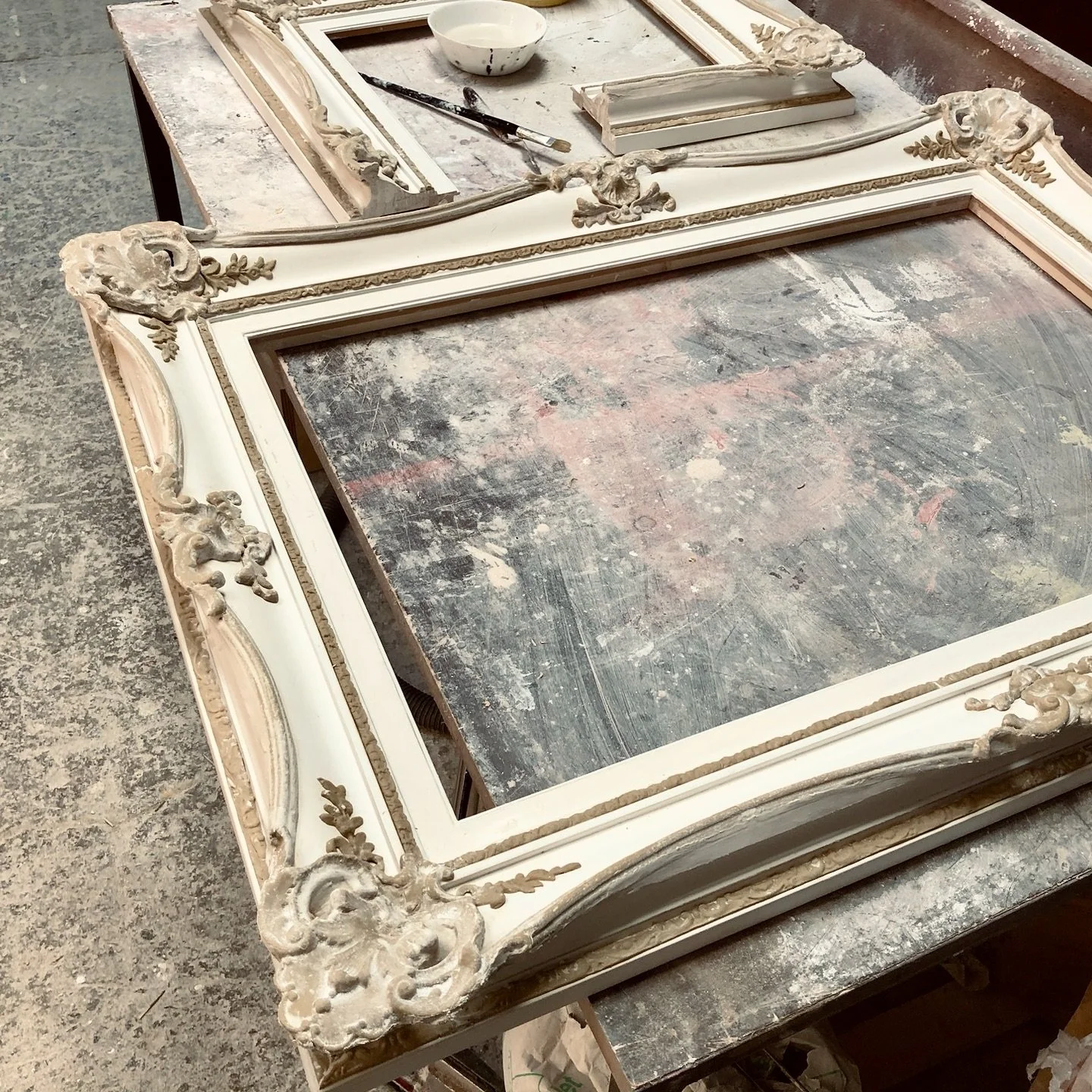
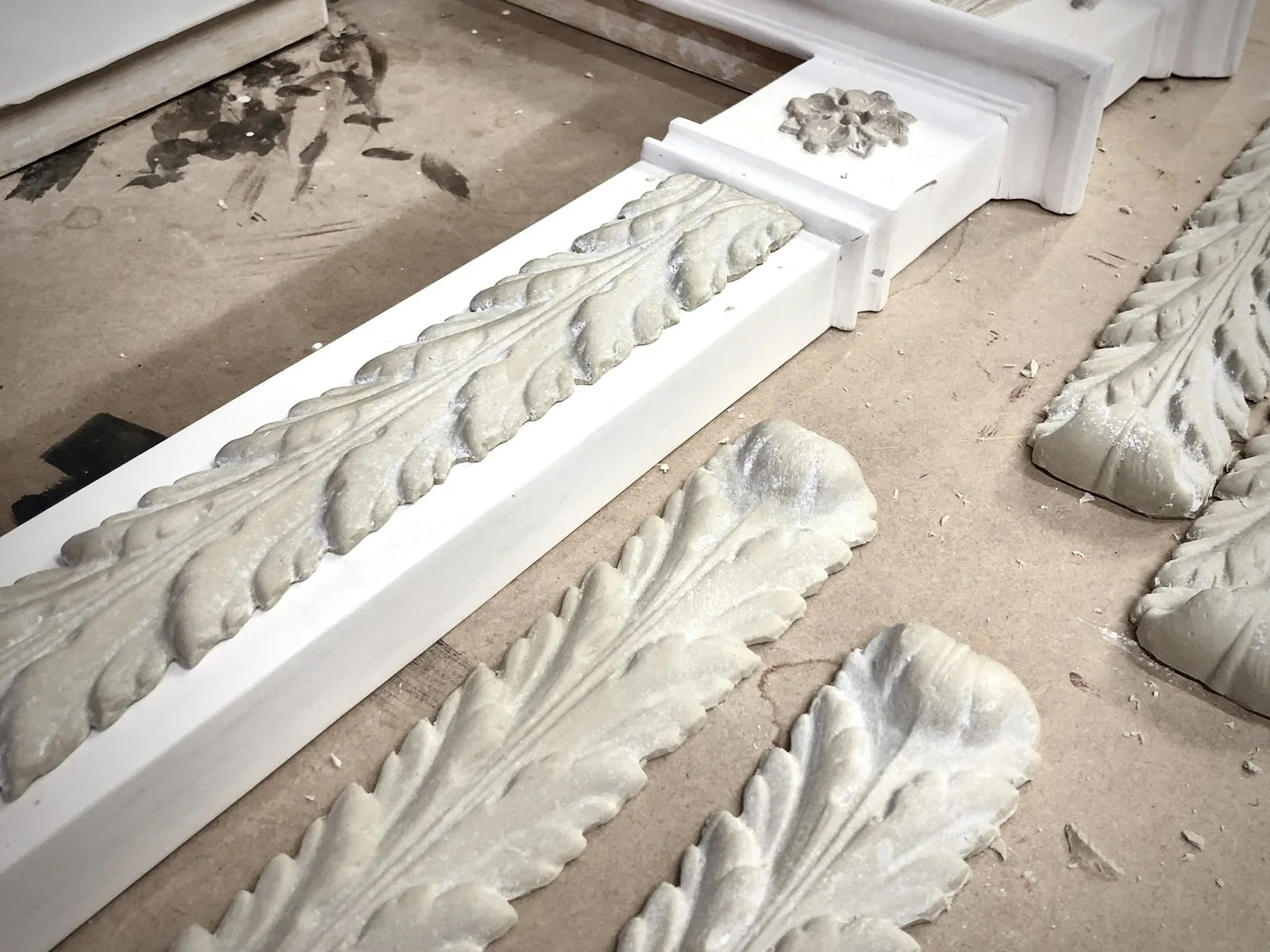
If the timber frame is to have ornamental details added to it, a common theme for historical frames throughout Australian history, the ornaments are produced by hand with the use of an ornament mould. Traditional composition is often used however there is great diversity and ingenuity amongst frame makers in producing ornamentation. The timber is prepared for finishing before, during or after the ornaments are attached.
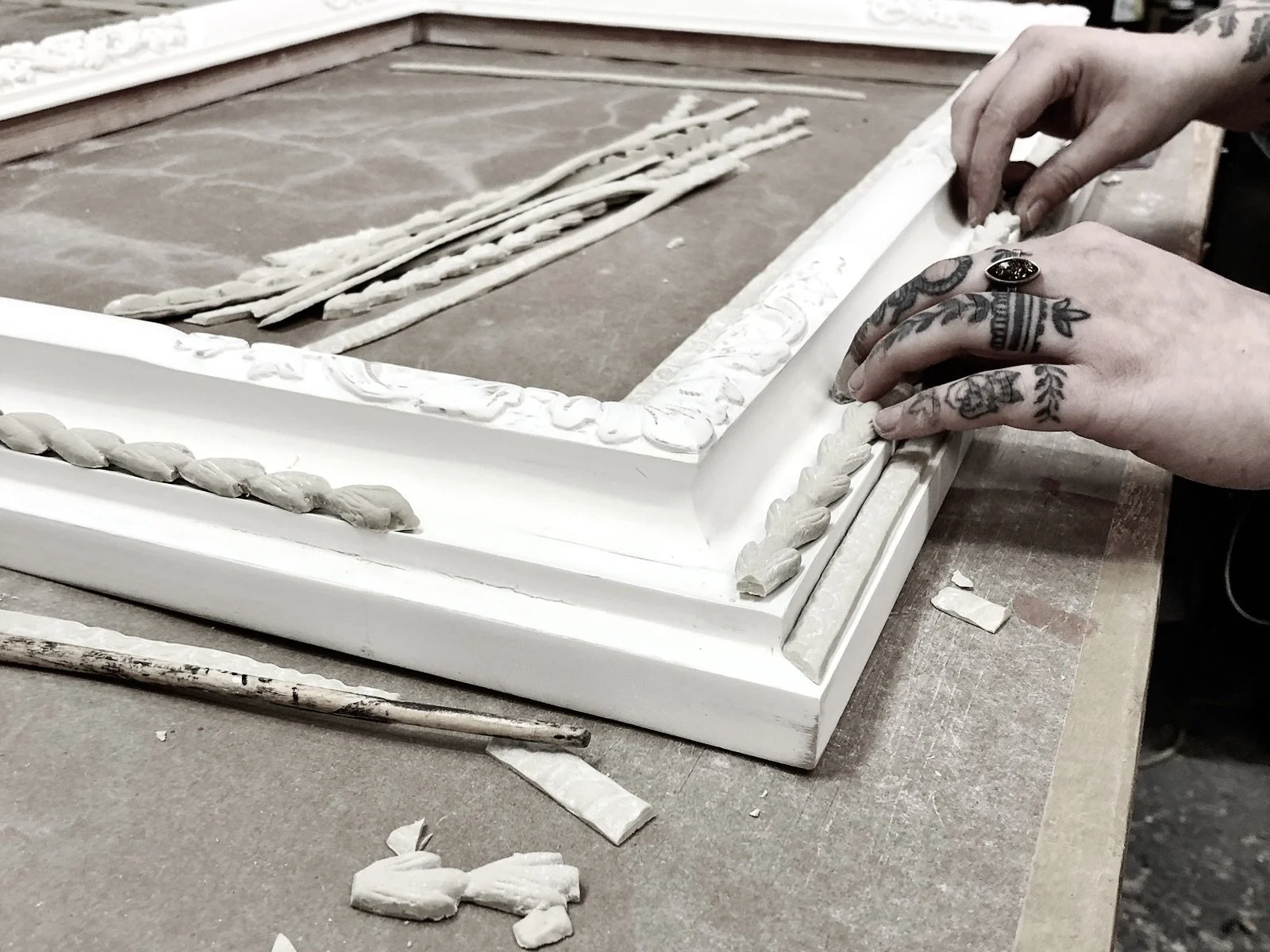
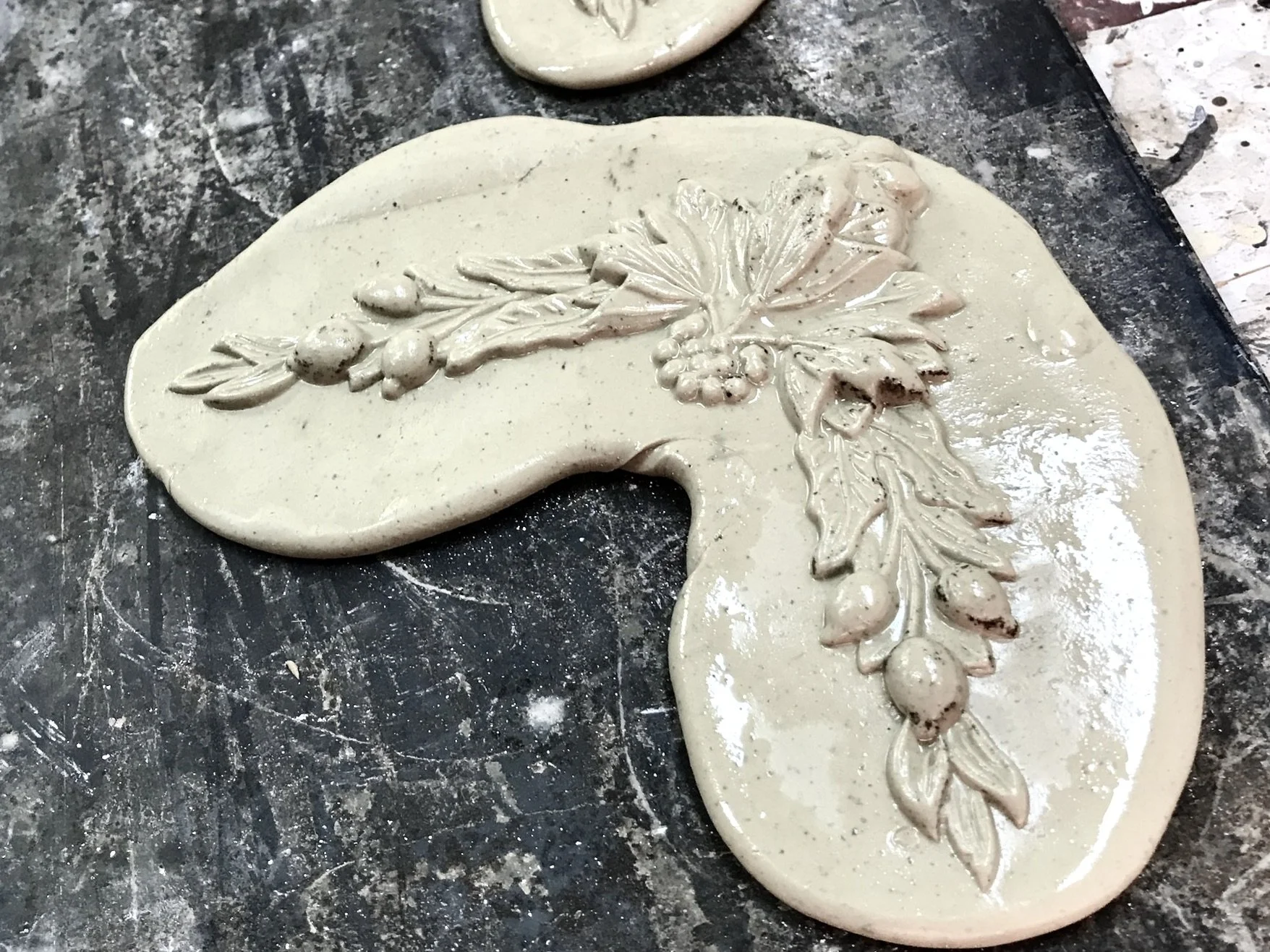
These are examples of frames in their raw gesso state with ornaments being steamed and attached to the frame profile. This is a lengthy and detailed process. Depending on the material used to make the ornaments, the ornaments may need time to cure and shrink once secured to the frame.
Step 5. Surface preparation for finishing
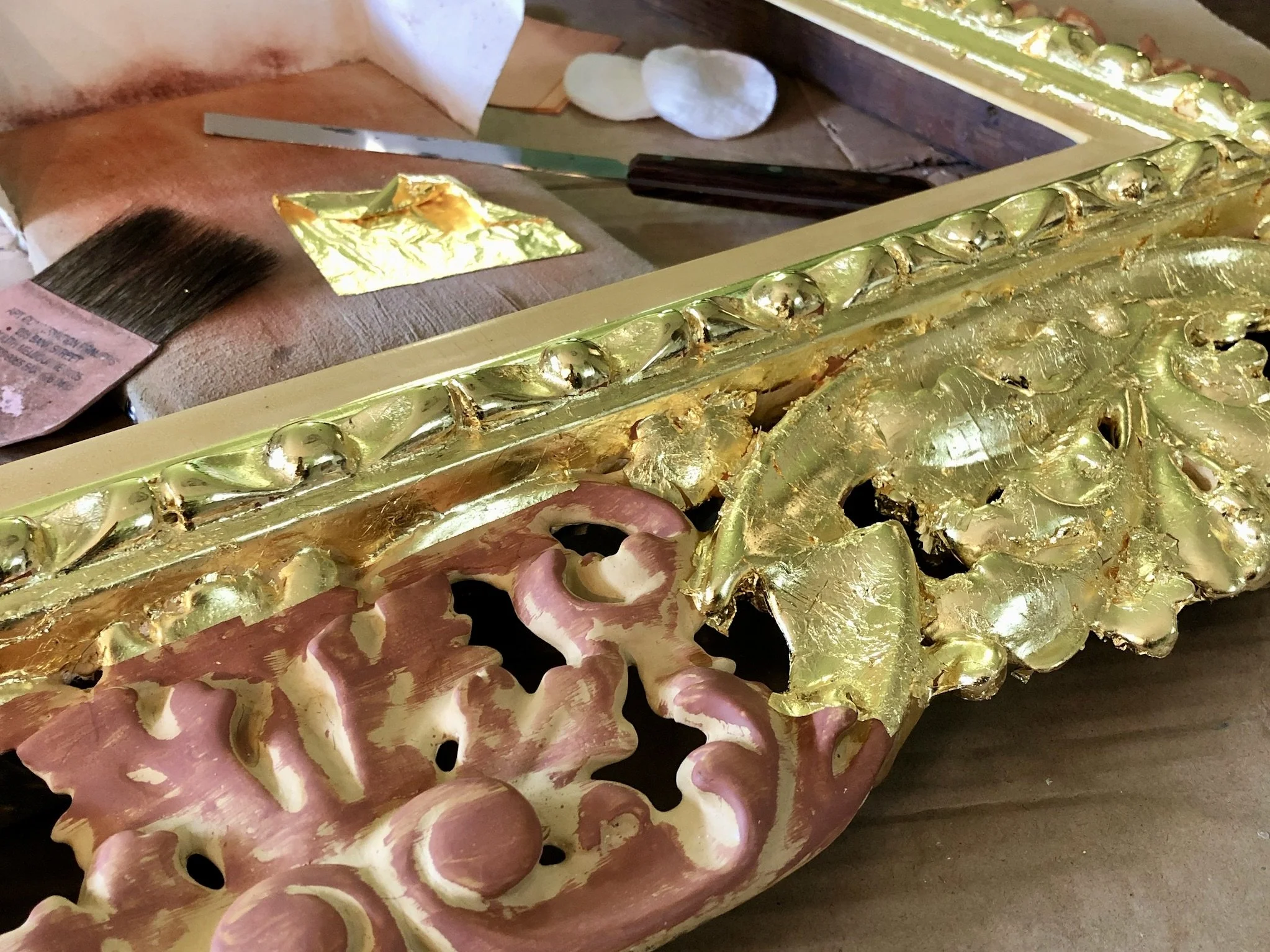
Step 7. Preparation for Display
Once the frame is complete and had time to dry and cure, the hanging system, such as high quality framing wire and accessories can be attached. For larger works or for unusual installation positions, custom hanging systems such as split batons can be made. Finally, the artwork is positioned or ‘fit-up) into the frame. Depending on the artwork and it’s needs, this may be done by a frame maker, a conservation picture framer or cultural heritage conservator.
For traditionally made frames, especially gilded frames, certain display conditions, cleaning and handling considerations are important. Storage, transport and display can significantly impact the longevity and condition of frames and artworks and we can provide some general advice on how to best protect picture frames in private collections or recommend more specialised resources or external expert advice.
We acknowledge the traditional owners of the land on which we work and live on: the Boonwurrung, Woiworung and Taungurong Peoples of the Kulin and East Kulin Nations.
We pay our respects to the Torres Strait Islander and Aborginal Elders, past, present and emerging.
The artwork on this website is protected by copyright and may not be used for any commercial or non-commercial purpose without the express written permission of the copyright holder. Any unauthorized use of the artwork, including but not limited to AI training of all forms, is strictly prohibited and may result in legal action for copyright violation. By accessing this website or any of the social media sites of Rich & Davis Artisan Frame Makers, you agree to abide by these terms and conditions and to respect the copyright of the artwork displayed on all Rich & Davis online platforms. The copyright holder reserves the right to modify these terms and conditions at any time without notice.
Get in touch.
Interested in contributing to this page? We’d love to hear from you.
We acknowledge the traditional owners of the land on which we work and live on: the Boonwurrung, Woiworung and Taungurong Peoples of the Kulin and East Kulin Nations.
We pay our respects to the Torres Strait Islander and Aboriginal Elders, past, present and emerging.
The artwork on this website is protected by copyright and may not be used for any commercial or non-commercial purpose without the express written permission of the copyright holder. Any unauthorized use of the artwork, including but not limited to AI training of all forms, is strictly prohibited and may result in legal action for copyright violation. By accessing this website or any of the social media sites of Rich & Davis Artisan Frame Makers, you agree to abide by these terms and conditions and to respect the copyright of the artwork displayed on all Rich & Davis online platforms. The copyright holder reserves the right to modify these terms and conditions at any time without notice.